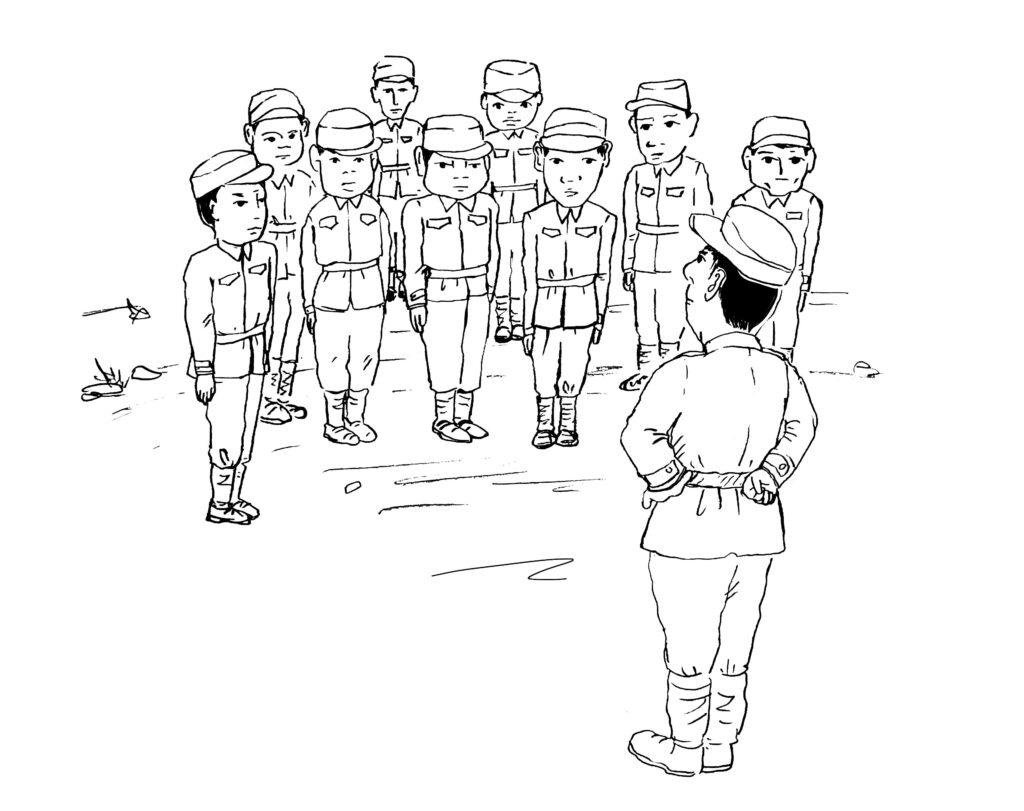




兩岸分治初期,反共救國軍的東海部隊(又稱海保部隊),轄下支隊曾經以此廣場為操練場,並借用民宅作為辦公室。曾為東海部隊一員的屋主落腳大浦聚落後,與兄弟協力打石、撿拾漂流木築屋,古時漁村普遍貧困,屋主也半義務性為其他居民造房。
The homeowner once kept chickens, ducks, and sows. He had a pen for pigs, and piglets were sold to Nangan. He also grew vegetables for a living and became a fisherman after getting married.
目前古宅僅殘存小閣樓之屋簷,以及重新建造的東海部隊立柱。戰地政務時期,國軍配合船期,偶爾會在兩立柱之間拉布幕播放電影,聚落村民及孩童經常聚集觀看。
Today, the attic eaves are the only remnants of the former house, along with a newly rebuilt East Sea Force posts. During the Battleground Administration era, at available times, the military office would set up a screen to play movies and often joined the dwellers and children.
東海部隊解編後,夏天的操練場,成了大浦人的曬魚場和通鋪。民眾傍晚搶著搬草蓆來佔位置,為了躲避屋內的炎熱露宿於此。白天太陽曬魚乾,晚上月光照夢蓆,別有一番趣味。
After the East
Sea Force was inactivated, the former training ground became a fish-drying yard
and a place to sleep. The dwellers would bring their straw mats outdoors and
have a spot to stay cool in
the evening. During the day, the sun dries the fish, and at night, the
moonlight illuminates the mat, creating a special scenery.